
ALBUM REVIEW: MUSE - THE WOW! SIGNAL (26/06/26)
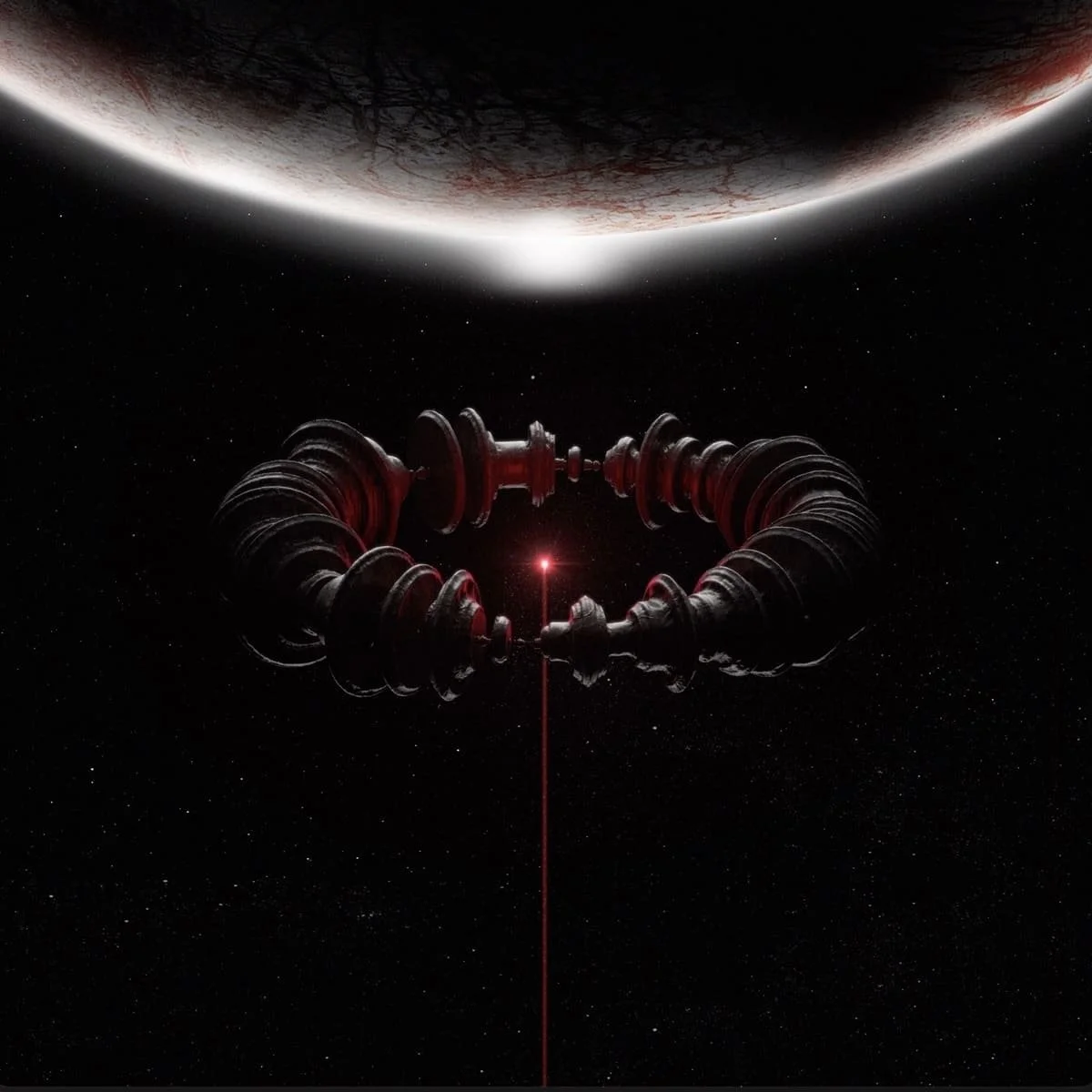
Muse's tenth studio album, THE WOW! SIGNAL, is arguably their strongest and most focused release since BLACK HOLES and REVELATIONS. It doesn't reinvent the band, but it refines nearly every aspect of what they've spent 25 years building: towering riffs, cinematic production, science-fiction themes, and emotional vulnerability.
THE WOW! SIGNAL, inspired by a mysterious radio transmission once thought to be a possible sign of extraterrestrial intelligence detected in 1977, becomes a symbol for reaching out into the unknown and wondering whether anyone is listening. Lead singer Matt Bellamy has said the songs were influenced by a difficult personal period, giving the record a level of emotional honesty that hasn't been this apparent for years.
When the band released 'Unravelling' in June 2025 as the first glimpse of what would eventually become THE WOW! SIGNAL, it immediately sparked excitement among fans. The single felt like a statement of intent. Its combination of crushing riffs, shimmering synths and an expansive, atmospheric sound suggested that Muse were entering a new creative chapter rather than simply revisiting familiar territory. 'Unravelling' was proof that the band still had surprises left.
The album often plays like the soundtrack to an epic science-fiction film. Orchestral arrangements, cinematic synthesizers and sweeping instrumental passages create the feeling of drifting through galaxies before erupting into thunderous guitar-driven climaxes, as if supernovas were unleashing their cosmic tapestry. Tracks seamlessly blend progressive rock, electronic music and symphonic textures, giving the record a grand, immersive quality that rewards listening from beginning to end.
Starting off with 'The Dark Forest', the album introduces a universe that is both beautiful and intimidating, where haunting synths, orchestral flourishes and crushing guitars capture the feeling of drifting into an endless void. The fans will appreciate the sharp and cutting signature attack of the guitar, also present in the classic track 'Knights of Cydonia'. The staccato, galloping tempo is cinematic and takes you off the Earth.
Following up with 'Nightshift Superstar', the song plays with rhythm, groove, and colour, as if passing through a region of space where light behaves differently. This is the first real sign of arrival energy and feels like the first breach of atmosphere: structured drums, brighter synths, and a more playful vocal delivery.
It is no longer questionable that Muse have always translated very human and raw emotions into something vast, and repeatedly balances vulnerability with spectacle. The result is music that feels personal even when it sounds cosmic, as if private thoughts are being broadcast across an entire universe. 'Shimmering Scars' is the perfect example of this because it subverts a key tension: shimmering stars instead of shimmering scars. We associate “shimmering” with something distant, beautiful, and cosmic like stars, but pairing it with something human and damaged transforms the image into something far more intimate. Instead of pointing outward to an infinite universe, it turns inward toward lived experience, where light and pain coexist.
The next song of the album, 'Cryogen' also follows that emotional introspection although it comes across as cold, mechanical, and almost detached, driven by sharp guitar edges, rigid electronic pulses, and a video production style that feels more like machinery starting up in deep space than a personal confession. With a title that suggests science fiction rather than romance, the early impression is that the song is about systems, isolation, or even survival in an extreme environment. Then the emotional meaning starts to reveal itself through contrast. As the track unfolds, the repetition and restraint begin to feel less like mechanical detachment and more like emotional suppression, as if something is being actively held back. That’s where the shift happens: what initially sounds like a sci-fi concept begins to feel like a metaphor for emotional stasis after love, where nothing is truly healed, just preserved in a frozen state. Paired with a clip depicting a cold, isolated, and cinematic environment that could be one of Jupiter's moon, Europa, Muse stay consistent with the space theme by using it as a language for emotional distance, but they keep it grounded by constantly reintroducing human signals, sometimes literally visual ones like blood. A reminder that in the whole universe, silent, something human is still there, leaking through it.
In this emotional transmission arc, we can also find 'Be With You', which is very aligned with Muse's general storytelling approach of emotional rupture, distorted communication, and fragile resolution.
One of the more experimental and structurally complex tracks in the fictional album, 'Hexagons', represents contact with something unfamiliar, almost alien in logic and structure.The rhythm feels fragmented and non-linear, built around shifting patterns and angular textures. Instead of smooth progression, the track feels like navigating a geometry that refuses to behave naturally. The guitars are sharp and dissected, recalling Muse’s more intricate writing styles, while the synth layers suggest something artificial or constructed rather than organic. There’s a sense of awe, but also confusion, like trying to interpret a language made of structure rather than sound.
After the alien mystery of 'Hexagons', this song feels like the realization that the greatest threat isn't lurking somewhere in the universe, it's something carried within us. Musically, this is where the album reaches one of its darkest peaks. The guitars are among the sharpest and most aggressive on the record, cutting through dense electronic textures with an urgency that recalls some of Muse's heaviest work. Rather than conveying straightforward anger, the riffs feel restless, as though they're trying to escape something that keeps pulling them back.
'Hush' is the emotional landing point of the album’s journey, and the most openly human moment in the sequence. The duet with Ellie Goulding introduces a softer, more intimate vocal contrast to Matt Bellamy’s tone. Rather than competing, their voices blend into something fragile and unified. After the cold vastness of space and the fractured signals of earlier tracks, 'Hush' feels like arriving somewhere safe enough to speak clearly again. The journey stops being about survival and becomes about presence.
As the final track of the album, 'Space Debris' feels like drifting through the aftermath of something long gone. Matt Bellamy’s vocals are more exposed here, giving the impression of isolation rather than performance. It feels like floating alone among fragments of destroyed worlds, where memory replaces momentum. It is almost up to us to decide whether we choose to drift and float, or to go back to Earth and reality with the same internal wounds as we're rotating through the remnants of our past connections.
From beginning to end, Muse constructs an album that feels like the soundtrack to an interstellar expedition, with each track acting as another chapter in an awe-inspiring journey through the unknown. THE WOW! SIGNAL reminds us that its greatest journey isn't through space, but through emotion. Muse use the vastness of the cosmos as a language for deeply human experiences, love, loss, isolation, hope, and reconnection, transforming distant planets, frozen moons, and mysterious signals into metaphors for the relationships we carry with us.